EN 388:2016+A1:2018
Protective gloves against mechanical risks.
The standard defines the performance values for gloves against mechanical risks such as abrasion, cut, tear, puncture and where applicable, impact.

ABCDEF
In 2016 and 2018 the standard was revised. The abrasion test has been improved with more detailed information, the “Coupe” cut resistance test has been revised and an ISO cut resistance test has been added, as well as an impact test for special applications.In order to improve the information on cut resistance, it was determined that the ISO test should be used as a reference in the event of a blunting of the blade in the so-called “Coupe” test.
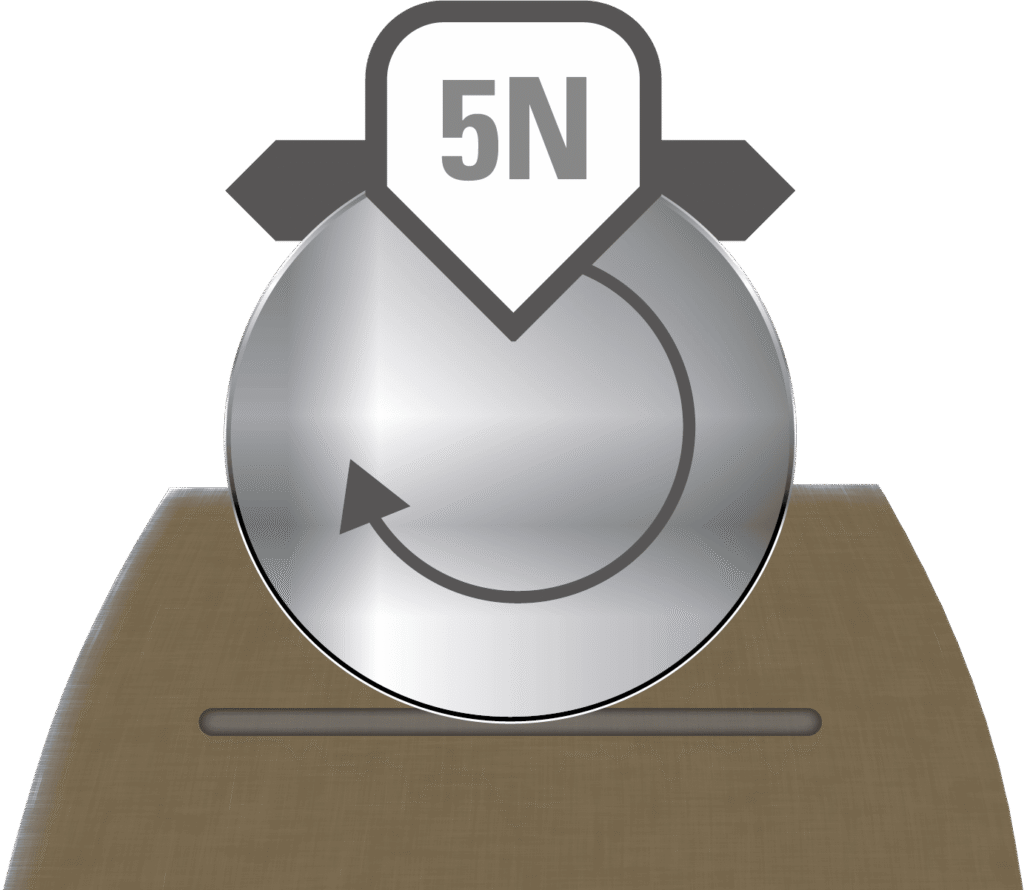
Coupe-Test
VS.
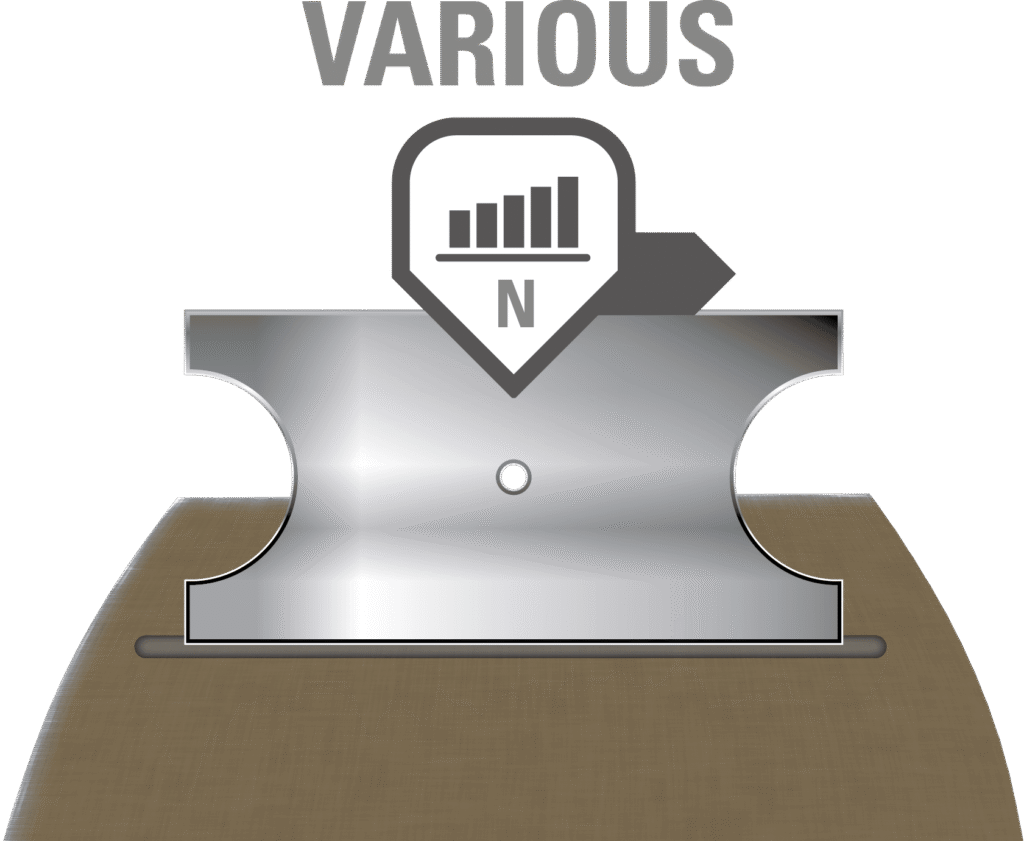
TDM-Test (ISO)
The numbers
The table shows all the tests, performance levels and the corresponding numbers and letter.
In understanding this table it can help you translate the performance levels of a glove to your needs or the needs of those you are choosing for.
| Performance level | ||||||
|---|---|---|---|---|---|---|
| 1 | 2 | 3 | 4 | 5 | ||
| A. Abrasion resistance (Cycles) | 100 | 500 | 2000 | 8000 | – | |
| B. Cut resistance – Coupe test (Factor) | 1,2 | 2,5 | 5,0 | 10,0 | 20,0 | |
| C. Tear resistance (N) | 10 | 25 | 50 | 75 | – | |
| D. Puncture resistance (N) | 20 | 60 | 100 | 150 | – | |
| A | B | C | D | E | F | |
| E. Cut resistance – TDM(ISO) test (N) | 2 | 5 | 10 | 15 | 22 | 30 |
| F. Impact protection | (NO) – | (YES) P | ||||
Abrasion resistance (A)
The test defines the abrasion resistance or durability of the glove material. The material is abraded under known pressure with a cyclic planar motion in the form of a Lissajous figure. Abrasion resistance is determined as the number of abrasion cycles required to break through.
Cut resistance (B)
The test measures cut resistance by a circular rotating blade that moves back and forth on the test specimen under a specified load and rotates in the opposite direction to this movement. The test simulates repetitive activities with a constant cutting load.
The test is considered a good indicator of protection against injury for light and medium-weight parts.
The test is ended manually after a maximum of 60 cycles.
For materials that have a dulling effect on the blade, the procedure according to EN ISO 13997 must be carried out.
Tip: Always consider the grip when looking for cut gloves as the more suitable to grip the lower the risk of cuts according.
Tear resistance (C)
The resistance to tear is defined as the force necessary to propagate a tear in a specimen slit half way along its length. Materials with high tear resistance ensure longevity.
In general, gloves should not be worn on rotating machines (e.g. drill). The tear strength of the protective gear would prevent tearing off if you were hit by the machine.
Puncture resistance (D)
The puncture force is defined as the force required to pierce a test sample using a steel pin of specified dimensions. This is not to be confused with perforating done using thin points or needles.
The outermost and innermost layers of the glove must not show any signs of melting or hole formation.
Impact protection (F)
Impact test according to EN 13594:2015. Here the absorption of the impact energy of 5 J on the absorption material of the glove is tested. This Test is optional and is only expressed with a P for passed.